Laks Industries
ENGINEERING THE CONSTRAINT STACK
Laks Industries builds foundational machines for the next phase of civilization.
We are a vertically integrated engineering organization. Twenty divisions, each centered on an irreducible domain of physics. Energy generation. Materials fabrication. Field manipulation. Computation. Propulsion. Automation. Biological interface. Each division builds a flagship machine. Together they form a single industrial stack where outputs from one division become inputs to the next.
The conglomerate model is not corporate strategy. It is physics architecture. Magnets feed fusion. Cryogenics enable quantum computing. Vacuum systems underpin particle accelerators. Advanced materials enable all of the above. Remove any one division and the system stops.
WHAT WE BUILD
Civilization depends on a finite set of physical capabilities. We build machines inside each one.
- Energy Fusion reactors, antimatter harvesting, directed energy systems
- Materials Atom-by-atom alloy printing, monocrystalline metals, transparent ceramics
- Fields 100+ Tesla superconducting magnets, full-spectrum EM control, wireless power
- Computation Diamond-substrate quantum processors, photonic interconnect, holographic memory
- Propulsion MHD plasma drives, ion thrusters, maglev transport
- Automation Swarm robotics, precision actuators, autonomous manufacturing
- Biology Synthetic genomics, molecular food assembly, neural interface
- Habitat Deployable architecture, environmental control, life support
- Logistics Predictive routing, vacuum-sealed rail, electromagnetic mass drivers
Every machine we build solves a constraint that currently limits what humans can do. Each solved constraint unlocks the next. That sequencing is the core of the business.
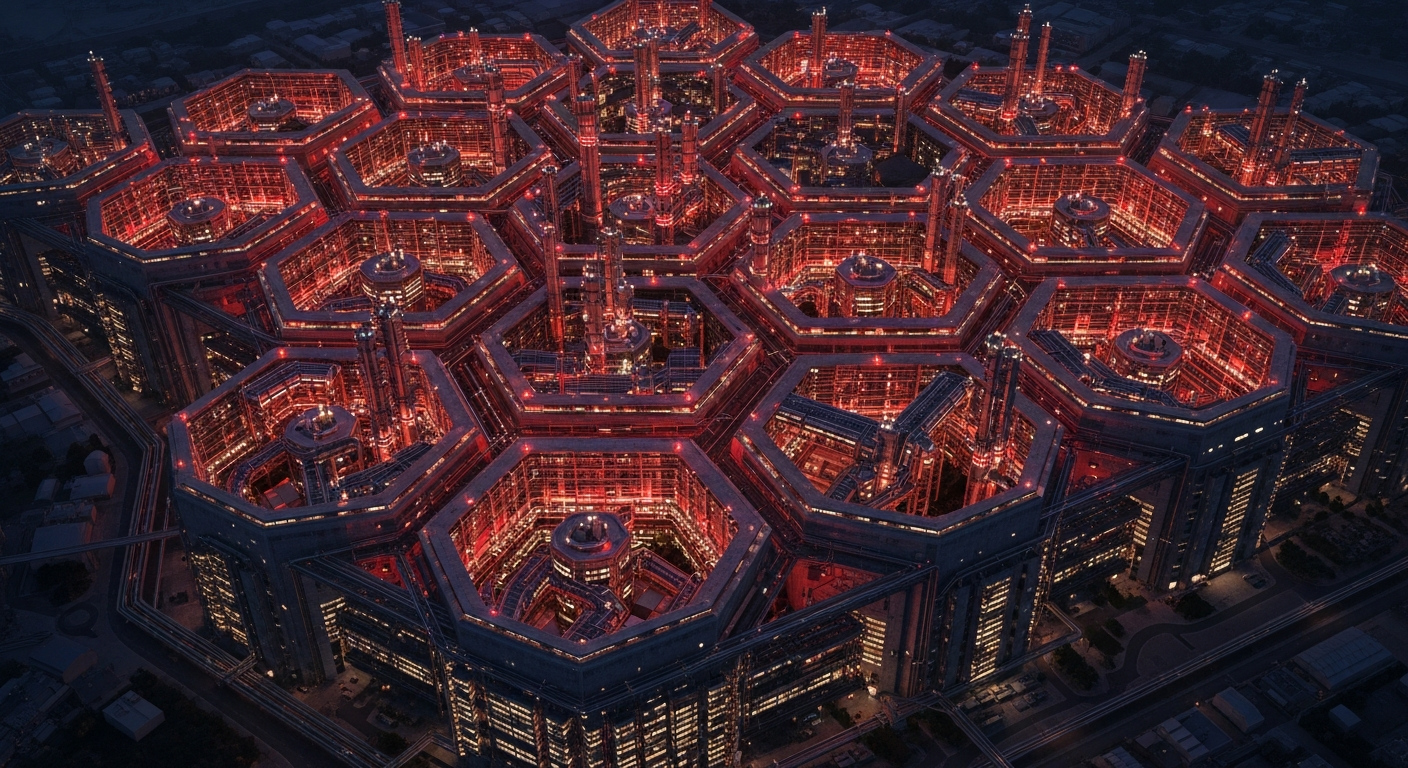
DIVISIONS
Twenty operating divisions. Each owns a single physics domain and builds around a flagship machine.
FLAGSHIP MACHINES
Each division is organized around a single highly engineered object. Status reflects current development phase.
| MACHINE | DIVISION | PHYSICS DOMAIN | STATUS |
|---|---|---|---|
| The Lantern | Stellar Furnace | Aneutronic fusion (p-B11) | Concept Architecture |
| H-LEV System | Highfield Magnetics | Superconducting magnets | Concept Architecture |
| C-Forge Omega | Metallic Sciences | Vacuum atomic printing | Concept Architecture |
| Soliton Block | Maxwell Continuum | Tunable directed energy | Concept Architecture |
| The Monolith | Aetheric Sciences | Diamond-lattice quantum computing | Concept Architecture |
| The Sphere | Lorentz Aerospace | MHD plasma propulsion | Long Horizon R&D |
| The Weaver | Foundation Kinetics | Swarm robotics | Concept Architecture |
| The Oasis | Matter Kitchen | Molecular assembly | Early Design |
| The Gram | Antimatter Production | Positron storage | Long Horizon R&D |
| The Halo | Brainwave Systems | Neural magnetometry | Concept Architecture |
| Hex-Cell | Modular Habitats | Adaptive architecture | Early Design |
| Flash Train | Fermat Logistics | Vacuum maglev | Concept Architecture |
| MK-Oasis | Laks Foundation | Humanitarian tech deployment | Early Design |

ENGINEERING PHILOSOPHY
Six operating principles govern how we build.
Every product starts from a physical constraint, not a market trend. If the physics does not close, the product does not ship.
We build the magnets that contain the plasma that generates the power that runs the computer that designs the next magnet. External dependencies are failure modes.
Each division exists because it solves a constraint that blocks other divisions. Magnets enable fusion. Vacuum enables materials. Cryogenics enable magnets. Solve the binding constraint first.
Every machine has a complete technical design document before a single component is fabricated. Design reviews are adversarial. The document is the product until the machine exists.
The kill switch is built before the ignition switch. Containment systems are validated before fuel is loaded. We assume every system will fail and design for that failure.
These machines take years to build. We do not optimize for quarterly returns. Capital is allocated to the constraint stack in the order that unlocks the most downstream value.
CURRENT PHASE
Laks Industries is in early-stage formation. This means:
- Division Architecture All twenty divisions are defined with complete technical briefs, flagship machine specifications, and integration maps.
- Design Documentation Detailed engineering documents exist for each flagship machine covering physics, materials, thermal management, and failure modes.
- Research Publication Active research across convergence engineering, deep-tech commercialization, and cross-domain integration.
- Infrastructure Planning Campus layout, shared utility systems, and inter-division logistics are specified.
We are transparent about stage because credibility comes from alignment between ambition and execution. The ceiling is high. The foundation is being laid now.
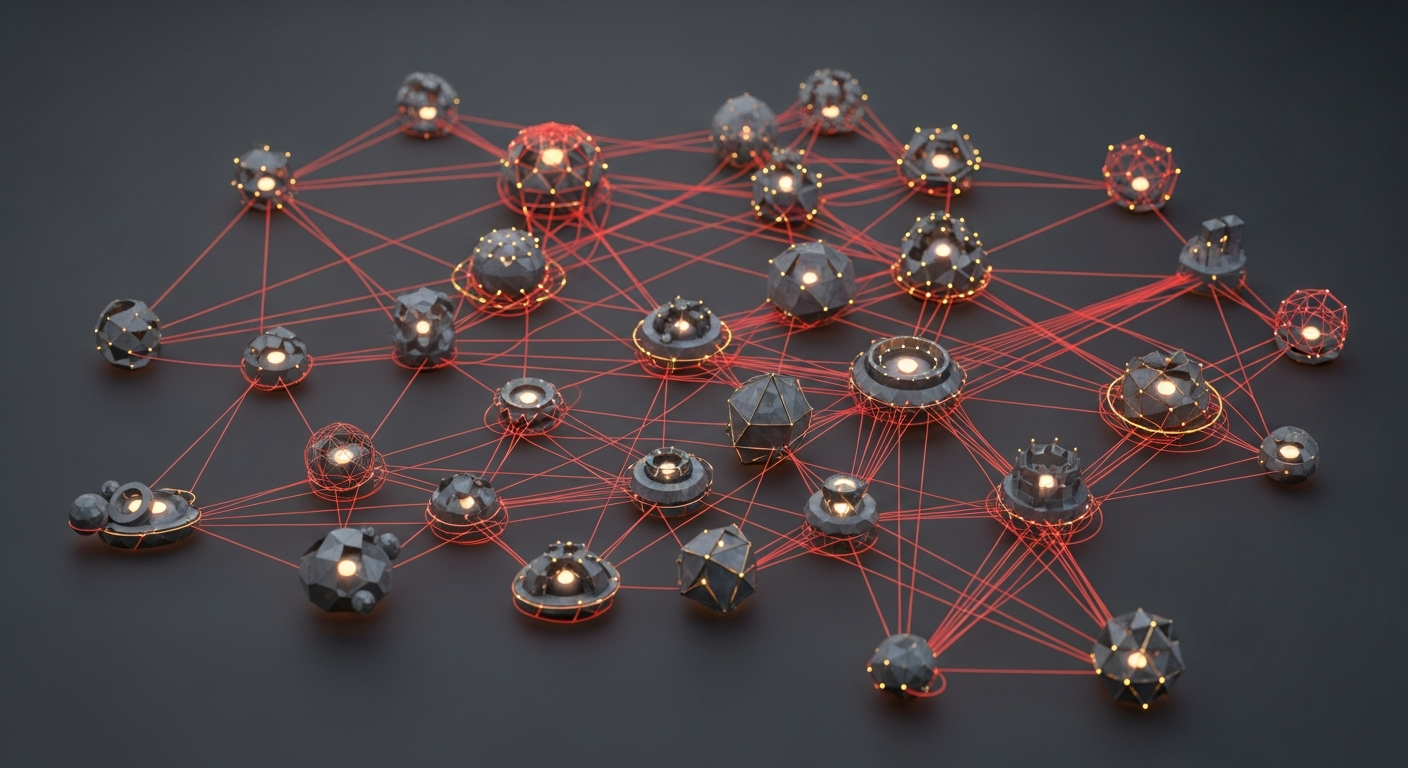
INTEGRATION MAP
The conglomerate model works because every division feeds the others. This is the dependency graph.
TOLLBOOTH OPERATORS VS. ROAD WORKERS: THE API/INFRASTRUCTURE THESIS IN THE AI TRANSITION
The infrastructure thesis driving technology markets today rests on a fundamental economic bifurcation that most investors have yet to properly internalize. We are witnessing the simultaneous rise and decline of two entirely different software categories, and the market is pricing them as though they inhabited the same business model universe. They do not.
There exist two classes of software in the modern economy. The first class—software that humans click on—derives its unit economics from seat licensing, from user adoption, from the expansion of headcount that requires corresponding expansion of subscription seats. The second class—software that machines call—derives its unit economics from throughput, from API calls, from event streams, from the infrastructure that autonomous systems require to operate at scale. These are not variations on a theme. They are structurally incompatible value propositions.
The toll collector versus the road worker metaphor captures this distinction with precision. Road workers—the traditional IT services firms, the body shops built on labor arbitrage—exchange human hours for revenue. They employ thousands, they train cohorts, they process engineering graduates into billable resources. That model is not a capability that repurposes. It is the capability that artificial intelligence makes redundant. The Indian IT firms constructed around this arbitrage mechanism cannot pivot their infrastructure, their campus systems, their entire organizational spine toward AI consulting. The physics of their business model prevents it. When headcount compression occurs—and it is occurring—the seat-based SaaS that depends on that headcount collapses in tandem. One fewer customer service representative means one fewer Zendesk seat. One fewer project manager means one fewer Monday.com seat. The compression is direct and inevitable.
The toll collectors, by contrast, operate on fundamentally different economics. Infrastructure providers charge per API call, per query, per event. As agentic workloads scale, as autonomous systems proliferate, consumption scales with them. The tollbooth owner does not care whether the entity making the call is a human or an algorithm. The economics remain proportional. Datadog, Cloudflare, MongoDB—these companies benefit from the structural shift that destroys their counterparts in the human-UI SaaS space.
The market has begun recognizing this bifurcation, though imperfectly. Broad indices that hold both categories have become poor proxies for either trade. The human-UI SaaS cohort has suffered sustained pressure. The infrastructure cohort has ripped higher. Yet most institutional analysis treats the software sector as a unified category, applying identical frameworks to fundamentally different business models. This is a category error, and it persists because the industry has trained investors to think in software generalities rather than in the physics of different consumption models.
Understanding asset price history serves a critical function in navigating this landscape—not as chart drawing, but as a window into buyer and seller psychology. Markets with diverse buyer and seller motivations create rich microstructures. The infrastructure thesis attracts capital flows from multiple vectors: long-term capacity planning, agentic workload scaling, AI operational spending, traditional cloud economics. Human-UI SaaS faces a single headwind: the algorithmic replacement of human work.
Laks Industries operates across the entire physics-based industrial stack. Our vertical integration gives us visibility into both the infrastructure acceleration and the labor compression simultaneously. We see the capital flows redirecting. The road workers were never the engine of civilizational progress. The infrastructure that enables autonomous operation always was. The market is beginning to price accordingly.
GILDED AGE PORTFOLIO PHILOSOPHY: TECHNOLOGY CREATES PHYSICAL DEMAND
Transformative technologies do not dematerialize economies. They rematerialize them at unprecedented scale. This principle animates our portfolio construction across the Atlantis doctrine, and it runs counter to the consensus narrative that dominates investment thinking in technology sectors.
Consider the substrate beneath artificial intelligence. The efficiency gains in computation—remarkable as they are—generate astronomical electricity demand. Data centers consume power at densities that force wholesale grid reconfiguration. Cooling systems must be reimagined. Transmission capacity becomes the binding constraint. The technology itself is the catalyst; the constrained physical layer captures disproportionate economic surplus. This pattern repeats across every major technological revolution of the industrial age.
The Gilded Age robber barons understood this intuitively. Rockefeller did not accumulate wealth by owning the internal combustion engine patent. He owned the refinery infrastructure and pipeline networks that the technology required. The railroad magnates accumulated lasting wealth not through locomotive innovation but through land grants and rail rights-of-way. The wealth accrued to those who controlled the constrained physical layer. The same principle applies during electrification, automotive proliferation, and the current artificial intelligence deployment cycle. Technology announces the direction. Infrastructure captures the returns.
Our position differs from technology-skepticism precisely because we take technological adoption seriously. We believe AI adoption will accelerate. We believe it will drive transformative changes across industrial production, scientific research, and computational finance. This conviction leads us toward copper, semiconductors for power distribution, industrial real estate, and the physical backbone systems that cannot be virtualized or dematerialized. The more aggressively AI deploys, the more acute the infrastructure bottleneck becomes.
Portfolio construction around this thesis requires identifying structural imbalances and positioning capital to benefit as those imbalances resolve. The imbalance is clear: investment capital concentrates in technology software and AI systems while physical capacity lags. The resolution requires sustained capital deployment into generation, transmission, processing, and distribution infrastructure. Our time horizons span years. We size positions gradually as structural pressure increases. We harvest outcomes while simultaneously planting new positions within the same domain.
This approach differs fundamentally from index tracking or benchmark-relative investing. It is structural analysis combined with patient capital deployment. It recognizes that physical infrastructure under stress becomes inelastic in supply. That inelasticity permits those who own the constraint to price accordingly. The returns compress not because of market efficiency but because demand presses against supply.
Valuation data supports this positioning. Across prior technological revolutions, the infrastructure layer consistently outperformed the technology layer on a risk-adjusted basis during the adoption phase. The technology companies experienced volatility and competitive displacement. The infrastructure assets generated steady, predictable cash flows backed by contractual demand. The pattern held through railroad expansion, electrification waves, automotive adoption, and telecommunications build-outs.
We are not underweight visible technology sectors because we are skeptical of technological progress. We are underweight because the risk-adjusted returns lie elsewhere in the value chain. The artificial intelligence revolution will generate enormous wealth. That wealth will accumulate first to those who own the physical systems the revolution requires. As computational demand growth outpaces infrastructure expansion, the pressure on the physical layer will intensify. Our portfolio positions us to benefit as that pressure converts into returns. The civilization engine requires physical infrastructure first, and surplus capital second.
AI AS CAPITAL ALLOCATION EVENT — THESIS FRAMEWORK
Artificial intelligence is not a productivity upgrade. It is a capital allocation event that forces a fundamental reordering of what constitutes durable value in the economy.
For the past two decades, capital flowed toward intangible digital assets. Software was abundant, scalable, and cheaply replicated. The venture model thrived on identifying scarce platforms before they became commodities. Valuations climbed on narrative momentum. This era is ending. The compression of development cycles—what once required years now takes months—has collapsed the durability of software-only businesses. Markets will shift from pricing expected lifetime dominance to pricing expected cycles of reinvention. The durability moat is gone.
This creates a cascade effect across capital allocation. As application layer software commoditizes, economic power migrates to infrastructure. Frontier model training requires vast compute resources, specialized hardware, and enormous energy supply. Access to these bottlenecks becomes the new control point. This is not abstract. The companies that own the infrastructure layer become the oligarchs of the AI era. They set the rules. Everyone else operates within constraints they define.
Simultaneously, scarcity is returning to the physical world. As software becomes abundant, tangible assets gain strategic weight. Land with power access becomes more valuable than land with proximity to talent. Logistics networks become geopolitical assets. Manufacturing capacity shifts from cost optimization to domestic strategic priority. Mineral access becomes central to competitive positioning. These are not secondary considerations. They are primary.
The labor repricing dynamic accelerates this shift. The most profound consequence of AI is not mass unemployment but labor restructuring. Entry-level roles shrink first. Coordination roles compress. Incremental hiring need drops across the economy. This creates household balance sheet strain, particularly in regions dependent on displaced cohorts. Regional inequality deepens. Governments respond with regulatory pressure, retraining programs, and industrial policy that explicitly favors domestic production and infrastructure investment. Capital allocation bends toward these incentives.
The intersection of these forces creates opportunity for businesses positioned at the synthesis of digital intelligence and physical ownership. The next decade belongs neither to pure technologists nor pure industrialists. It belongs to the convergence. Intelligence amplifies ownership. Scarcity defines power. Companies that deploy capital efficiently into hard assets enhanced by AI command premium valuations relative to those relying solely on digital scale. Return on invested capital becomes the central metric. Tangible book value and asset replacement cost matter more than narrative-driven growth projections.
Traditional value investors focused on statistical cheapness. The coming cycle rewards ownership of physical bottlenecks enhanced by intelligence. Balance sheets regain prominence. A company with disciplined capital allocation, tangible assets, and AI-driven operational leverage represents the investment thesis of this era. The market will experience a multi-year phase where traditional earnings multiples break down. Companies will report rising margins, shrinking headcount, and improved operating leverage. Earnings will rise. Stock performance will diverge. Investors accustomed to chasing narratives will struggle to reorient toward durability and constraint.
This reordering is not speculative. It is structural. The atoms were never obsolete. They were simply underpriced. As capital rotates from software to infrastructure to hard assets, the industrialist thesis becomes economically dominant. We are constructing the capital allocation framework for this transition. The next phase of value creation belongs to those who own the scarcity and operate it with intelligence.
POST-SCARCITY SOCIETY: THE MEANING PROBLEM AND THE STATUS ECONOMY
Abundance solves the survival problem. It does not solve the civilization problem. This distinction defines the engineering challenge before us as we architect post-scarcity infrastructure at Laks Industries.
The material abundance we engineer through fusion deployment and resource extraction represents only half the equation. Once scarcity ceases to constrain human choice, the operative constraint shifts from "how do we get enough" to "how do we live meaningfully." This is not philosophy disguised as engineering. This is the central technical problem of civilization design.
Consider the energy-backed currency systems we deploy during transition phases. These systems serve a critical function: they allocate value to the agents who contribute most to abundance itself. Fusion developers, vertical integration specialists, resource engineers—their compensation reflects their genuine contribution to the transition. The energy currency creates a rational feedback loop that accelerates the very infrastructure that will eventually obsolete the currency itself. This is intentional architecture, not accident. As marginal costs approach zero and production capacity exceeds human consumption desire, the entire apparatus transforms. Direct resource allocation replaces currency. The transition mechanism becomes unnecessary once it succeeds.
But the dissolution of scarcity-based economics introduces what we call the meaning problem. Remove the necessity of labor for survival, and the zero-sum status hierarchies that sustained civilization under scarcity become exposed for what they are: arbitrary constructs competing for human attention. The risk is not idleness. Extensive research shows humans naturally pursue activity, creation, and engagement. The actual risk is comfortable nihilism—a state where individuals engage in activities that generate personal satisfaction but contribute nothing to civilization's onward trajectory.
We observe this in pilot communities where resource security is complete. Some inhabitants pursue meaningful work: scientific exploration, caregiving, artistic creation, environmental restoration. Others pursue status games that consume resources without generating meaning—conspicuous consumption, zero-sum competition for positional goods, elaborate hierarchies disconnected from material function. Both behaviors fill time. Only one maintains civilization's capacity to advance.
This problem demands infrastructure. The Atlantis doctrine that guides Laks Industries recognizes that post-scarcity is not a destination state but a new operating regime requiring deliberate design. We must architect institutions, incentive structures, and cultural frameworks that channel human motivation toward activities that genuinely expand civilizational capacity. Not through coercion. Through the alignment of individual flourishing with collective advancement.
Meaning-generating activities are not arbitrary. Exploration pushes the frontier of human knowledge. Scientific work solves previously intractable problems. Creation produces artifacts of lasting value. Caregiving sustains and develops human capability. These activities share a property: they generate increasing returns to effort. Unlike status competition, where one person's gain is another's loss, these activities compound. Each contribution enables subsequent contributions. The physicist's discovery becomes the engineer's tool. The engineer's creation becomes the explorer's equipment.
Our current work integrates this understanding into the infrastructure we deploy. We are not simply building fusion reactors and vertical integration networks. We are designing the transition architecture through which human civilization moves from scarcity-driven organization to meaning-driven organization. The energy currency is the bridge. The institutions we build during abundance's arrival are the destination framework.
The post-scarcity society that emerges from these designs will be defined not by what humans no longer need to do, but by what they choose to do when freed from necessity. We are engineering that choice architecture into the foundation.
THE ORIGINAL DOW AS PHYSICAL ECONOMY THESIS
Charles Dow constructed his index in 1896 from the physical substrate of industrial civilization. The twelve stocks he selected—railroads, mining operations, sugar refineries, lead smelters, rubber producers—formed the sinews of a material economy. No financial intermediaries corrupted the composition. No software companies inhabited the roster. Every enterprise either extracted minerals from the earth, refined raw materials into usable form, moved commodities across continents, or manufactured durable goods. This was economy reduced to its essential physics: the conversion of natural resources into productive infrastructure and the distribution networks that moved those resources to where they created value.
That index embodies a thesis about durability that we have spent the last 18 months validating across our investment portfolio. The Gilded Age robber barons understood something that modern capital allocation has largely forgotten: irreplaceable physical networks generate durable competitive moats. Vanderbilt controlled railroads. Rockefeller commanded refinery capacity and pipeline throughput. Carnegie integrated steel production vertically. Their fortunes rested not on disruption but on the impossibility of disruption. You cannot build a second transcontinental railroad. You cannot reroute the continental pipeline network around an incumbent operator. You cannot duplicate a copper mine's ore body or a lead smelter's installed capacity. The regulatory, geographic, and physical constraints that protected Gilded Age monopolies remain operative today.
We have traced the survivorship patterns through the original Dow components. General Electric persisted through technology transitions because it occupied a critical layer of industrial infrastructure. Lead producers survived over 125 years because the commodity remains sovereign-relevant—necessary for ammunition, shielding, and chemical processes that no substitute fully replaces. Rubber supply chains consolidated and persisted because transportation infrastructure depends on tire production and the feedstock networks that serve it. What perished were the textile mills, the telegraph operators, the gas lighting companies—the intermediation layers disrupted by newer technologies. The survivors controlled the physical substrate. They owned the irreplaceable networks. They managed the material flows that civilization requires.
This pattern extends to the modern utility monopolies that inherited the Gilded Age structural advantage. Energy Transfer controls approximately 30 percent of U.S. natural gas throughput. Kinder Morgan operates roughly 40 percent of the continental pipeline capacity. Enterprise Products Partners manages the largest natural gas liquids network connected to the Gulf Coast hub. These companies function as digital-age successors to the Edison-Insull utility monopolies—operators of natural monopoly infrastructure with decades-long replacement cycles, regulatory capture mechanisms, and throughput capacity that cannot be duplicated without sovereign-level capital investment. They are not software companies subject to disruption vectors. They are physical networks with multi-decade competitive permanence.
The sovereign capability layer reveals the same pattern under different pressure. Defense contractors occupy the irreplaceable position that du Pont and Remington held in prior industrial epochs. Nuclear submarine manufacturing, missile production, advanced materials processing—these capabilities cannot be outsourced or relocated without threatening national strategic position. They generate durable competitive advantages precisely because their criticality makes them politically and economically permanent.
We are rotating capital toward enterprises that control irreplaceable physical networks, critical input supply chains, and sovereign-relevant infrastructure. The original Dow thesis validates across 125 years of market history. The enterprises that survive are the ones whose assets require rebuilding the physical layer to displace them.